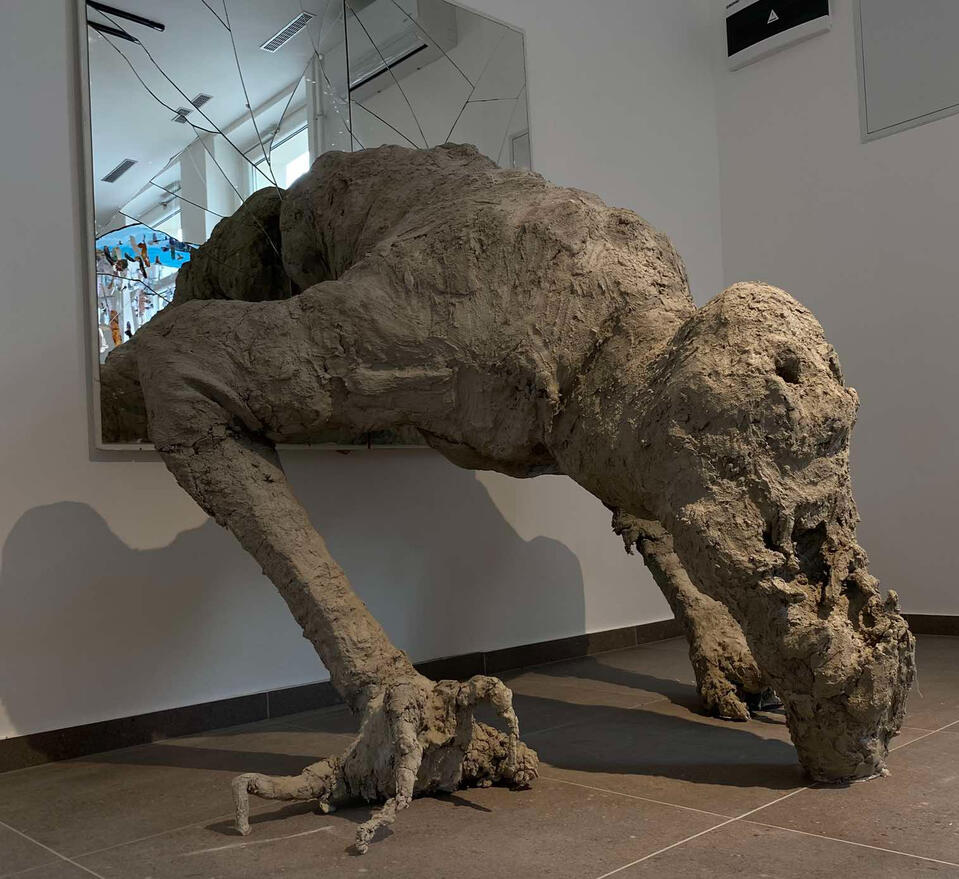
milena jeftić
Born in Doboj, Bosnia and Herzegovina in 2001, she currently lives in Modriča and studies at the Academy of Arts in Banja Luka.
Her artistic practice focuses on psycho-physical phenomena that are closely connected to her personal experiences, particularly those of a negative or traumatic nature.
She primarily works with spatial installations, employing highly fluid and interdisciplinary media.
The conceptual foundation of her work is often rooted in psychoanalysis and philosophy, which serve as essential frameworks for both reflection and expression.
A letter from a sister
Installation
Expression technique: embroidery
Dimensions: 30x40cm
2024/2025
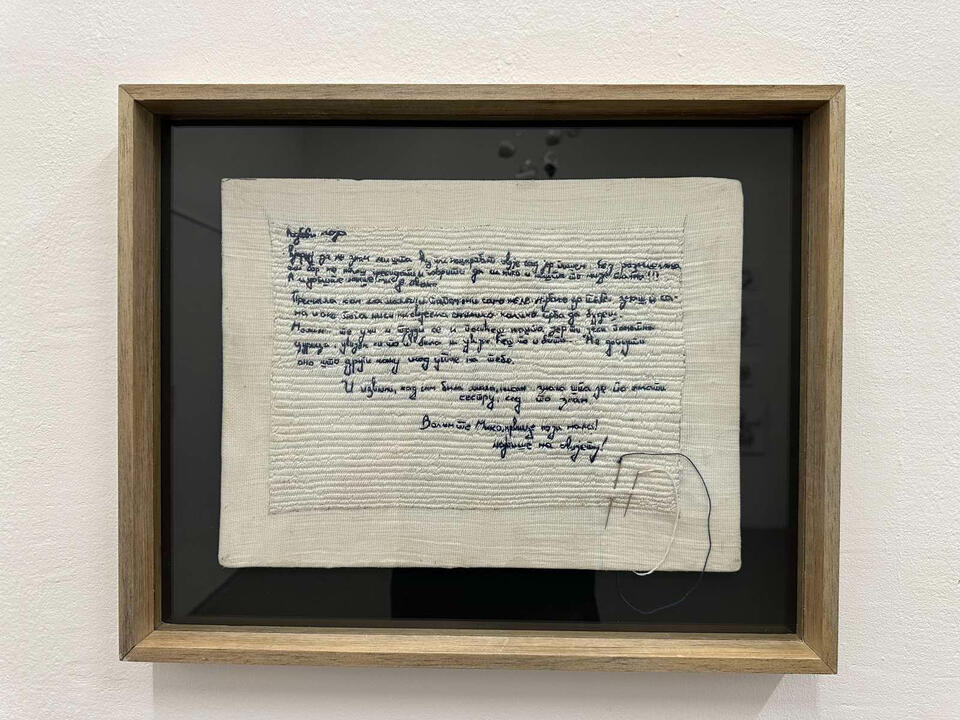
The work is based on a deep personal experience of a suicide attempt, through which a sister writes a letter to her sister, expressing her support and love in moments of greatest sadness and pain. In the letter, the sister shares her feelings, hope and comfort, giving the sister strength to deal with a difficult situation. Through this text, the author reveals the complexity of interpersonal relationships, the importance of family and support in the most difficult moments of life.
EMPTY
Sculpture, wire, plaster
65x67cm
in 2025
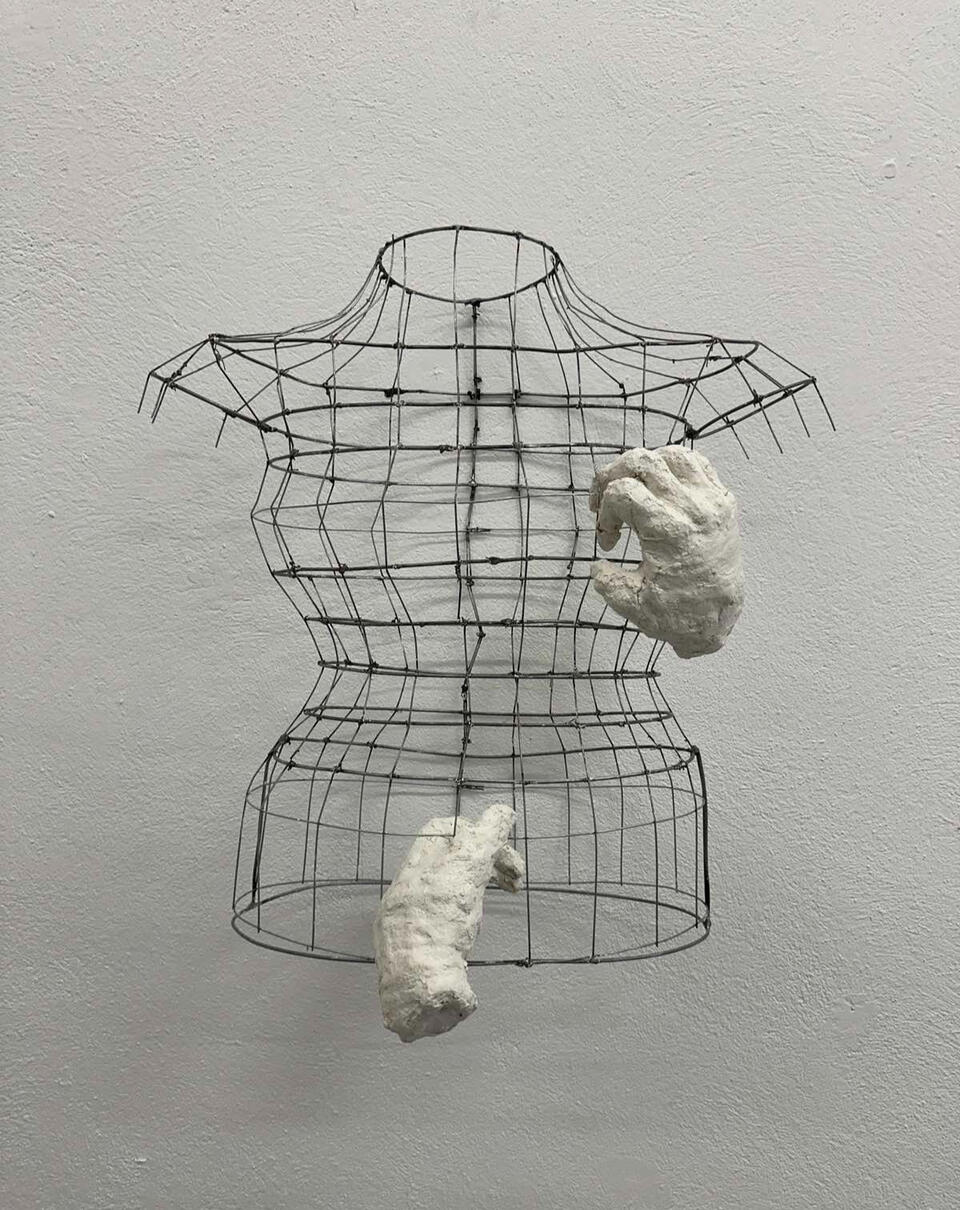
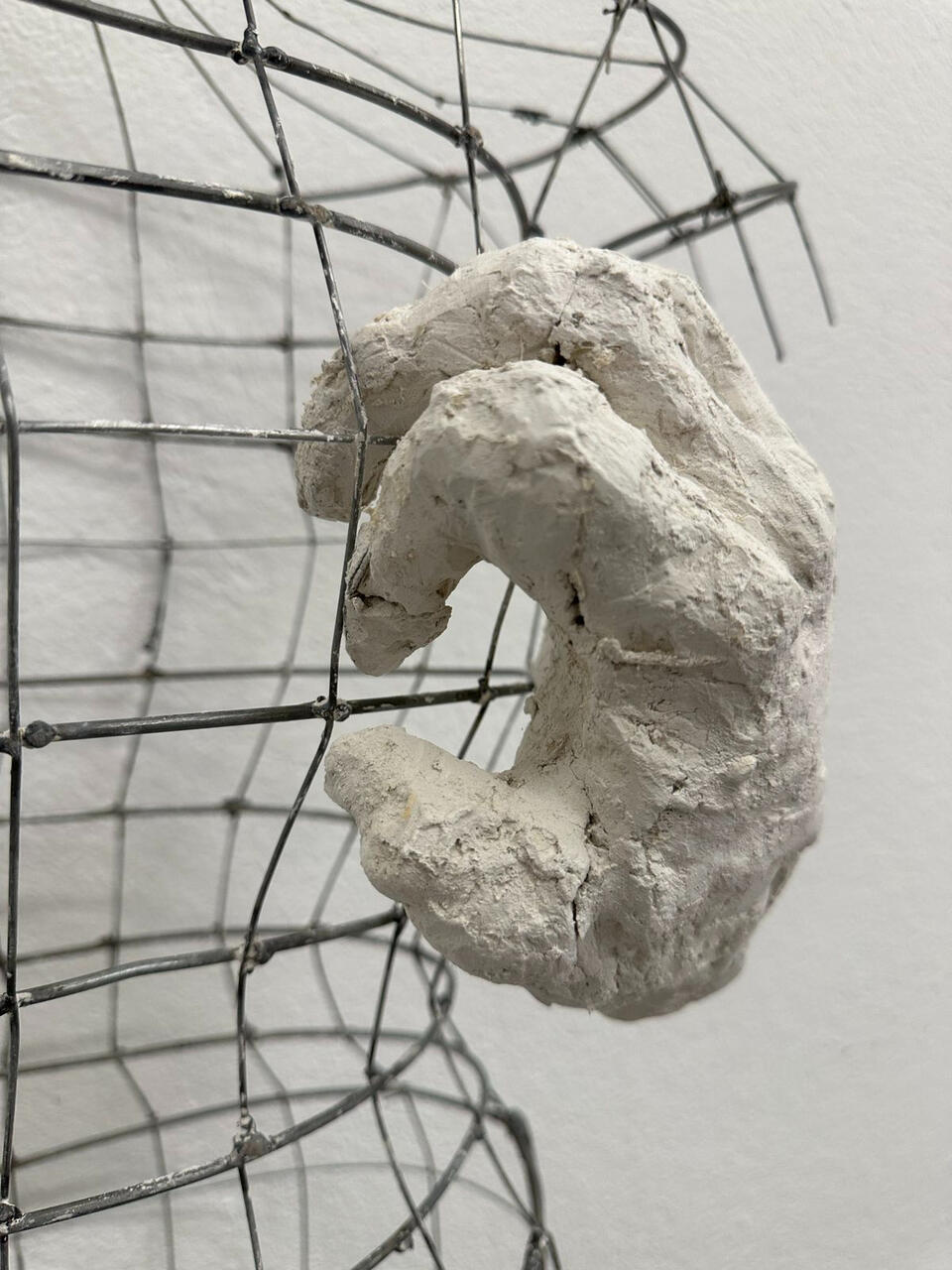
The sculpture symbolizes the inner state of a person after sexual abuse, through the combination of two contrasting materials. The hard, cold material represents outer protection, the weight of trauma and emotional closure. In contrast, a brittle material that has no power on its own explains the very reason why actions such as that occur.
The void in the sculpture itself speaks more than the form: it is a place of unspoken pain, but also the possibility of renewal. The sculpture does not depict the trauma directly, but conveys its psychological presence through a subtle play of materials.
MASKS OF LOVE
Installation, wooden frame, plaster, cardboard
46x39cm 39x31cm
2025

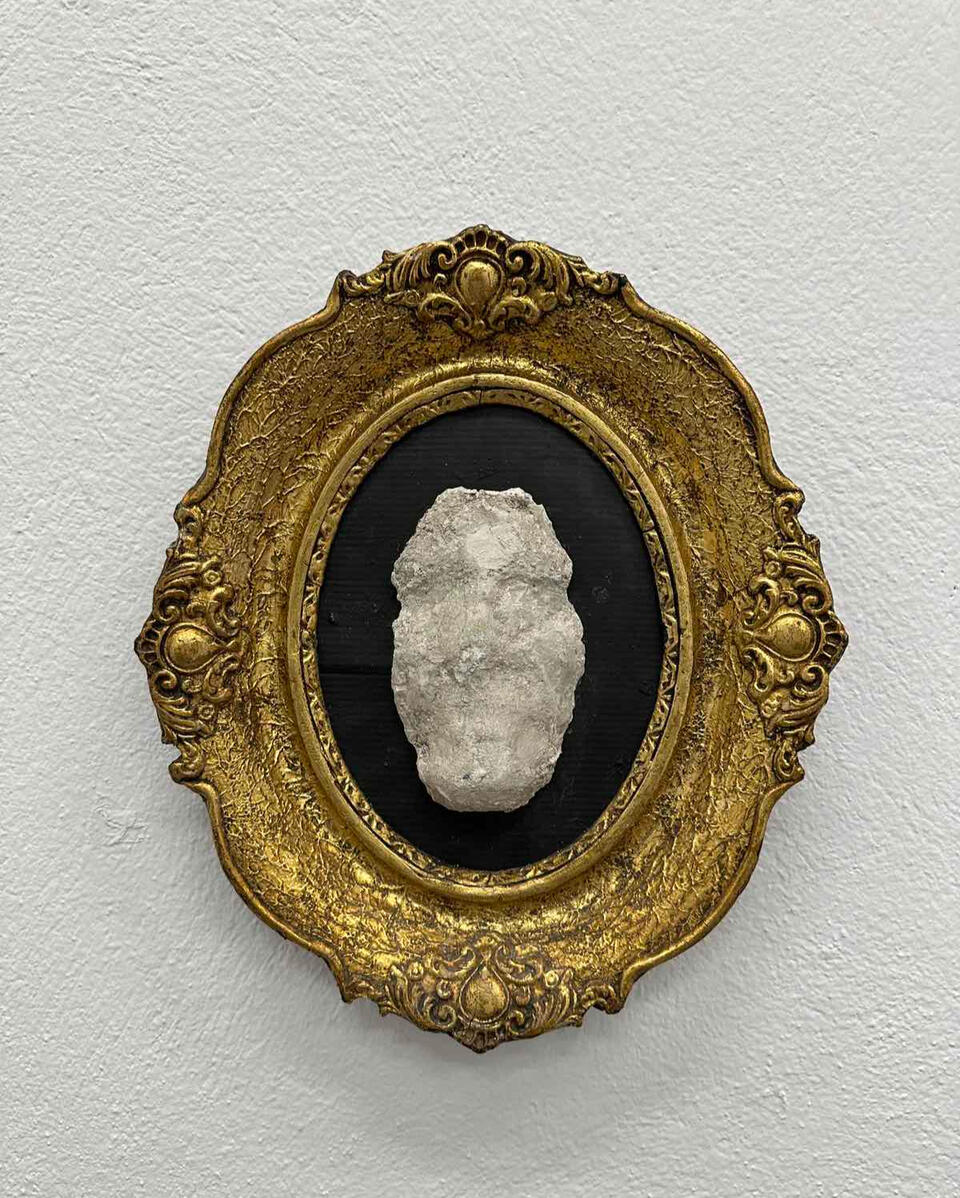
The work explores the way in which family traumas are transmitted through generations, often hidden behind the concept of love. Plaster masks represent emotional patterns that remain frozen, the masks are expressionless, a symbol of learned behaviors and unsurpassed wounds.
The masks are placed in frames made of old embroidery, establishing a parallel between inherited crafts and inherited traumas. Just as embroidery is passed down from generation to generation, so are unspoken pains, patterns of control, silence and coldness just like that love.
EXPERIENCE
Video installation lasting 13 minutes
2024/2025
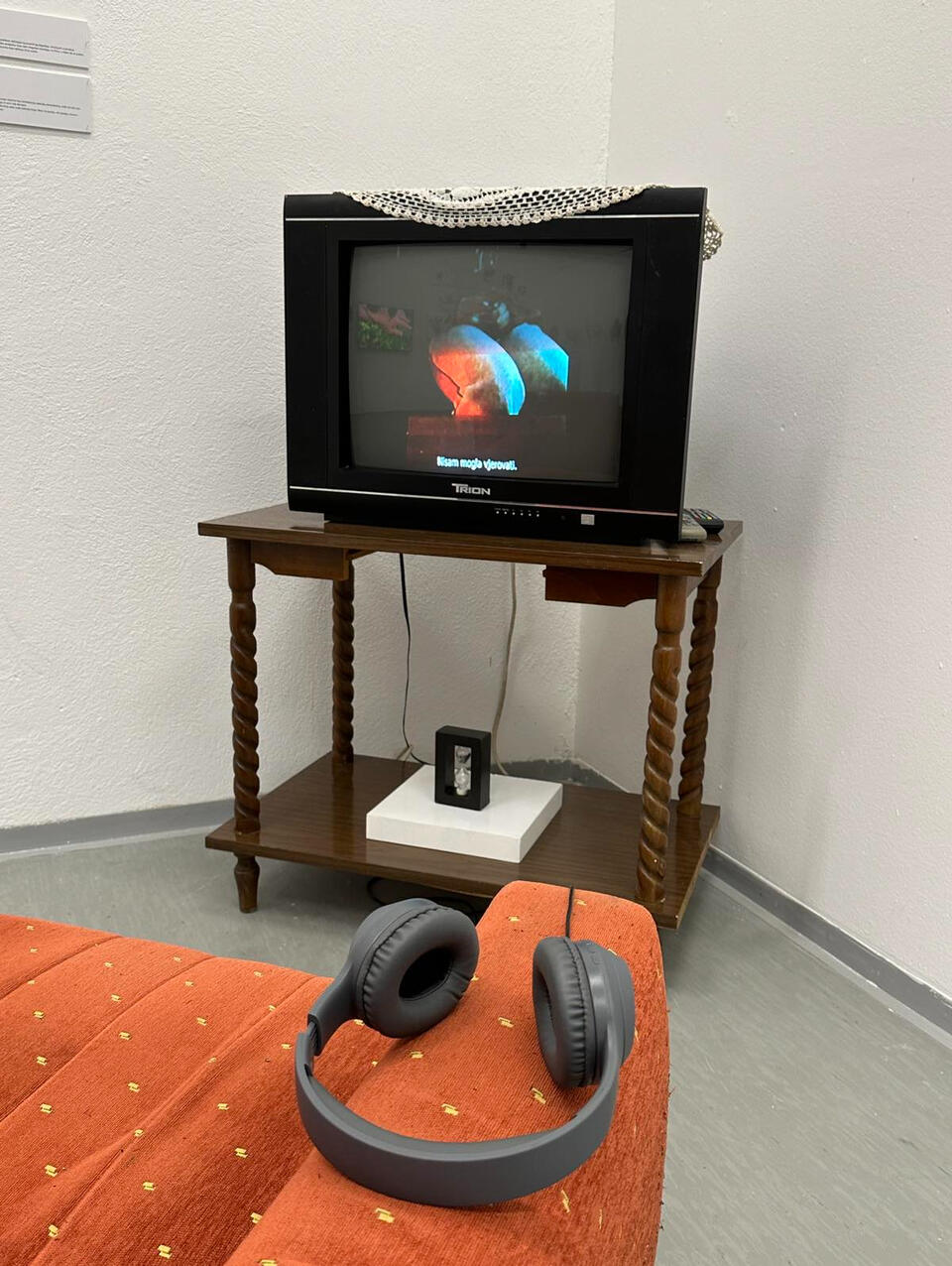
It is based on the individual's experiences and the psychological experience of a traumatic event, exploring the internal processes, emotional reactions and psychological consequences that such events leave on the victim, with the aim of bringing the complex and often invisible aspects of trauma that shape a person's life closer to the audience.
BROKEN
Installation
Material: porcelain, wood, motors
2024/2025
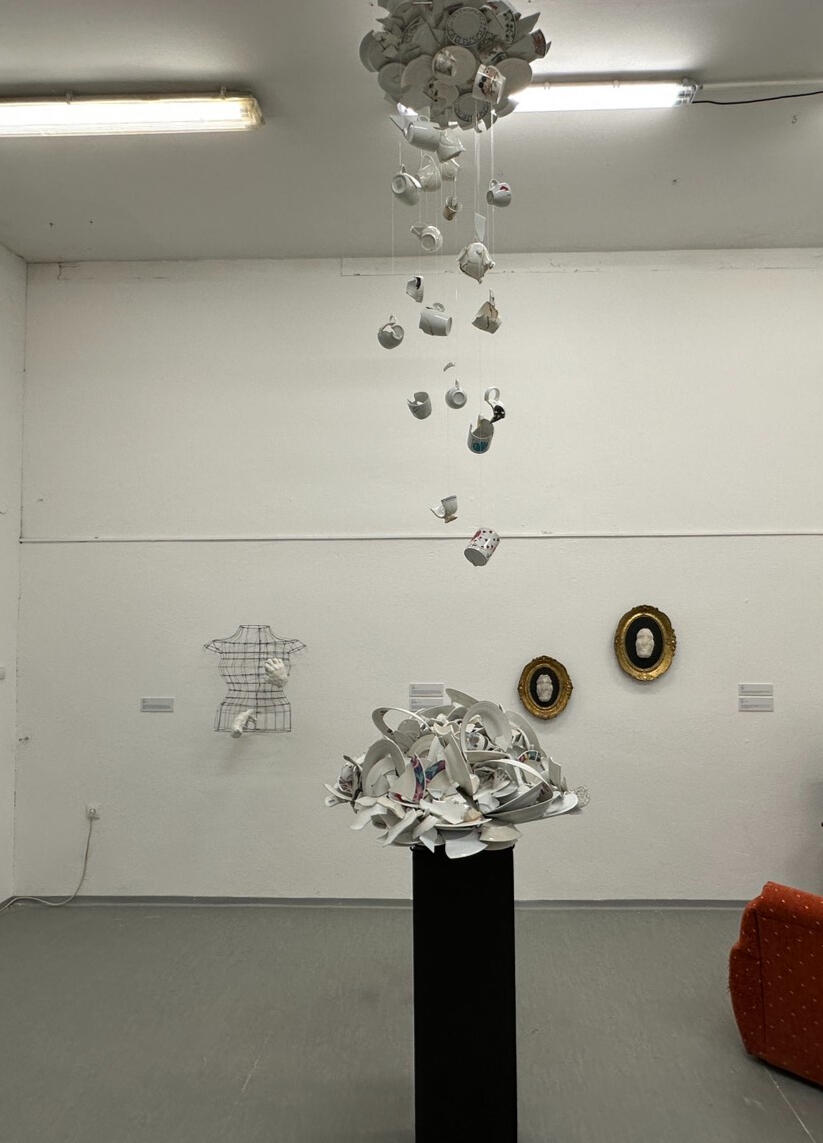
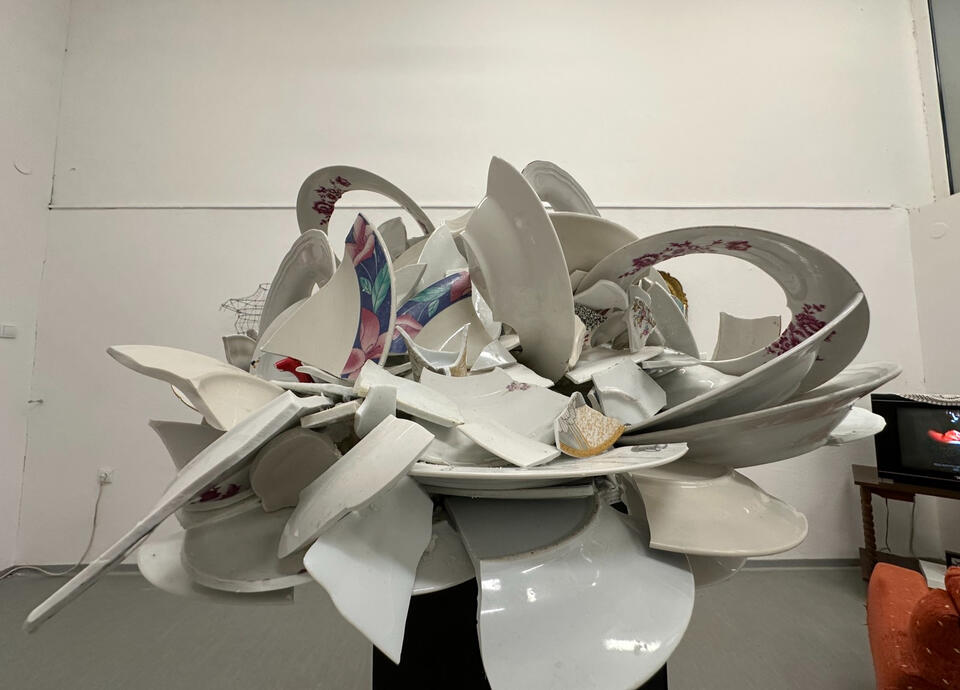
Inspired by the Japanese kintsugi technique, which celebrates the beauty of imperfection and renewal, and the deep conviction that what is renewed has greater value than its original form, this philosophy examines the inner psychological state of the individual. She explores the limits of his brokenness, but also the possibility of reassembly, asking whether a person, just like broken porcelain, can be reassembled and find strength within himself.
The installation consists of two kinetic works that, through mutual communication, form a whole.
GIFT
Installation
Materials: Embroidered tablecloths
Dimensions variable
2025
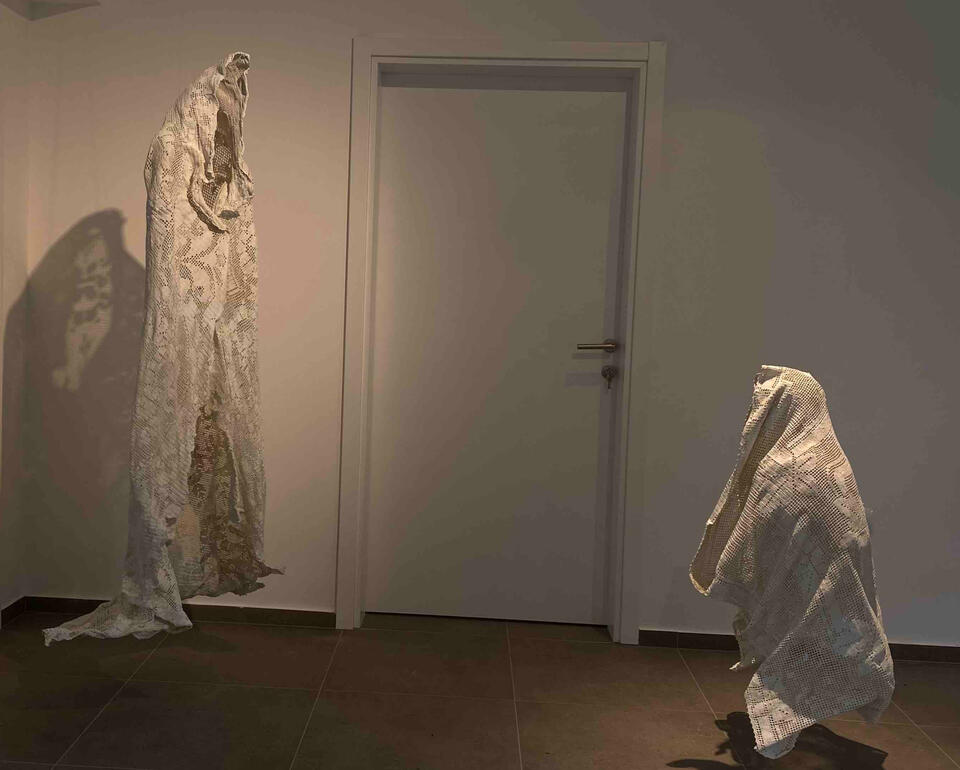
The work is inspired by the transgenerational transmission of trauma and the personal experience of the line from grandmother to granddaughter. Epigenetics confirms that traumatic experiences are written into the body and transmitted to offspring through biological means. The material carriers of the work are embroidered and starched tablecloths, objects that preserve the traces of women's work and generational habits.
A shadow of myself
Installation
Materials: Wood, glass, tile adhesive
2025/2026